Posted Date: 19 Nov, 2026
Discover the powerful world of meditation mudras and unlock a deeper sense of calm, focus, and spiritual connection. These simple hand gestures can enrich your daily meditation routine without special equipment. Moreover, learning Mudras and Chanting can help you build a mindful spiritual practice at home. Explore three easy mudras and understand how to use them effectively.
Mudras and Chanting offer meaningful ways to bring awareness, intention, and discipline into meditation. These traditional practices connect hand gestures with focused breathing and sacred sounds. However, beginners often feel confused about where to start. Fortunately, a few simple mudras can make meditation easier to follow. Explore their traditional significance and practical use with guidance from Sri Moni Bhaskar learn from Best Astrologer in Kolkata.
Mudras are symbolic hand gestures used in traditional Indian spiritual practices, yoga, and meditation. The Sanskrit word Mudra refers to a gesture or symbolic seal. Practitioners use specific finger positions to support concentration, mindfulness, and spiritual awareness.
In traditional Indian philosophy, each finger carries symbolic meaning. Therefore, different hand positions represent different elements, intentions, and spiritual qualities.
Furthermore, Mudras and Chanting often complement each other during meditation. While a mudra provides a physical point of focus, chanting introduces sound and rhythm into the practice.
For beginners, these techniques offer an accessible way to explore meditation at home.
In Vedic traditions, spirituality often explores the relationship between the human body, natural elements, planetary symbolism, and consciousness.
Similarly, certain spiritual interpretations associate fingers with the five elements:
These associations form part of traditional yogic and spiritual teachings. However, they should not be confused with scientifically established explanations of physical or planetary effects.
For those exploring spiritual practices, the Best astrologer in Kolkata can offer guidance about traditional beliefs and their place in a personal spiritual routine.
What are the benefits of meditation mudras? This question interests many people who want to make their meditation sessions more meaningful.
Traditionally, meditation mudras support mindfulness and help practitioners maintain a consistent meditation posture.
Here are some commonly discussed benefits:
Important: Mudras are complementary spiritual practices. They do not guarantee specific health benefits or replace professional medical treatment.
You do not need expensive equipment or complicated instructions to begin. Instead, start with three traditional meditation mudras that are easy to practise.
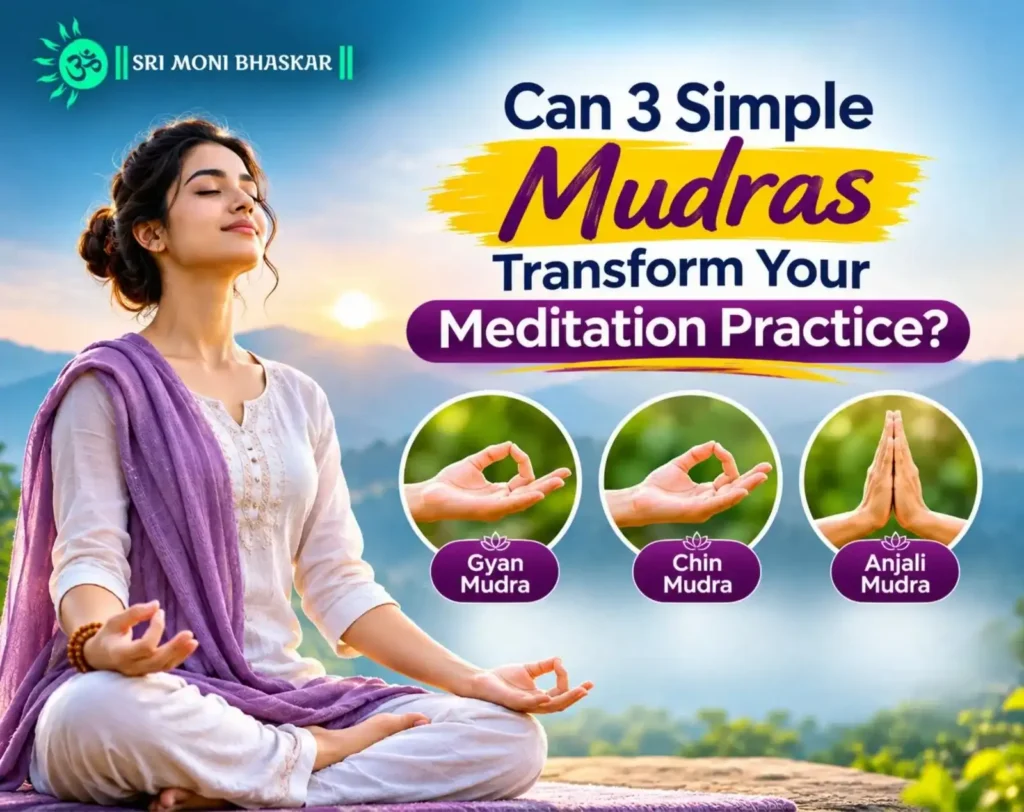
Gyan Mudra, also called the gesture of knowledge, is among the most recognised meditation hand positions.
How to practise Gyan Mudra:
Traditional significance:
Gyan Mudra symbolises wisdom, awareness, and knowledge. Many meditation practitioners use it during breathing exercises and silent meditation.
Best suited for: Beginners who want a simple hand gesture during meditation.
Dhyana Mudra represents contemplation, balance, and inner awareness. It is commonly associated with seated meditation.
How to practise Dhyana Mudra:
Traditional significance:
This mudra symbolises stillness and meditative awareness. It encourages practitioners to maintain a steady posture and direct their attention inward.
Best suited for: People who enjoy silent meditation and mindful breathing.
Prana Mudra is traditionally associated with vital energy and life force. It offers another simple hand position for people exploring traditional yogic practices.
How to practise Prana Mudra:
Traditional significance:
Prana Mudra symbolises vitality and the importance of life energy in yogic philosophy.
Best suited for: Beginners interested in exploring traditional yoga and meditation gestures.
Here is a quick comparison to help you choose a suitable mudra for your daily practice.
| Mudra | Traditional symbolism | Finger position | Practice focus |
| Gyan Mudra | Knowledge and wisdom | Thumb + index finger | Mindfulness |
| Dhyana Mudra | Meditation and stillness | Hands resting together | Contemplation |
| Prana Mudra | Vital energy | Thumb + ring + little finger | Traditional energy symbolism |
Combining Mudras and Chanting can make your meditation routine more structured. A hand gesture gives your hands a consistent position, while chanting provides a sound or phrase for concentration.
Follow these simple steps:
Start with five minutes. Gradually increase the duration if you feel comfortable.
Traditional mantra chanting can accompany different meditation practices.
Some commonly used examples include:
Choose a mantra that aligns with your spiritual tradition and personal comfort.
Astrology and traditional spiritual practices offer different approaches to self-reflection and personal development.
An experienced astrologer may explain the traditional symbolism of planetary influences, spiritual disciplines, and meditation practices. However, there is no established scientific evidence that a particular mudra changes planetary positions or guarantees astrological outcomes.
Sri Moni Bhaskar explores spiritual traditions and astrology to help people understand their symbolic and cultural significance.
If you want to explore Mudras and Chanting alongside traditional astrological knowledge, consulting the Best astrologer in Kolkata for spiritual guidance may help you understand these practices within a broader spiritual framework.
You can also explore a Mudra meditation guide by astrologers to understand the traditional meanings of hand gestures and their role in meditation. Book consultation for Astrology.
Although mudras are simple, beginners sometimes make avoidable mistakes.
Watch out for these common problems:
Remember, a comfortable and consistent routine matters more than perfection.
Mudras and Chanting offer a simple way to explore mindfulness, meditation, and traditional Indian spirituality. Gyan, Dhyana, and Prana Mudras provide three accessible starting points for beginners. However, patience and consistency matter more than quick results. Explore these practices with an open mind and learn their deeper significance through the spiritual guidance of Sri Moni Bhaskar.
Meditation mudras traditionally support mindfulness, concentration, and spiritual awareness. They also provide a simple physical focus during meditation. However, their traditional benefits should not be considered guaranteed medical outcomes.
Gyan Mudra is a popular beginner-friendly option. Simply touch the tip of your index finger to your thumb while keeping the other fingers relaxed.
Yes. You can include comfortable mudra practices in your daily meditation routine. Begin with a few minutes and gradually adjust the duration according to your comfort.
Yes. Many traditional meditation practices combine hand gestures with mantra chanting. You can hold Gyan Mudra while gently chanting Om or another mantra.
Gyan Mudra is traditionally associated with knowledge, awareness, and concentration. Many practitioners use it during meditation and breathing exercises.
Absolutely. You can practise simple mudras at home without special equipment. Choose a quiet place, maintain a comfortable posture, and follow the correct finger positions.
Some Indian spiritual traditions associate hand gestures, planetary symbolism, and natural elements. However, these associations belong to traditional belief systems and do not establish scientifically proven planetary effects.
You can consult Sri Moni Bhaskar to explore traditional astrology and spiritual practices. The guidance can help you understand the cultural and symbolic significance of meditation techniques.