
Posted Date: 20 Aug, 2026
Hello Reader!
Welcome to the blog page of Sri Moni Bhaskar, best astrologer in Kolkata.
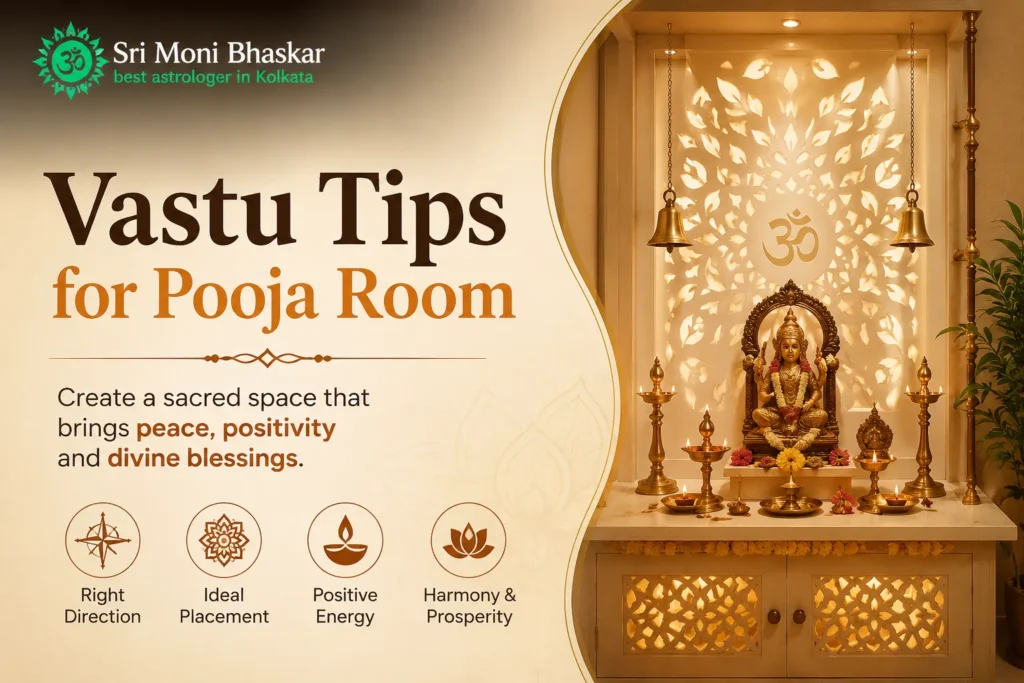
The pooja room is considered one of the most spiritually significant spaces in a Hindu home. It is a place where families pray, meditate, perform rituals, and seek peace and positive energy. According to traditional Vastu Shastra, the location, direction, arrangement, colours, lighting, and cleanliness of the pooja room can influence the spiritual atmosphere of the house.
When a pooja room is not planned according to traditional Vastu principles, certain Vastu doshas may be believed to affect the harmony and energy of the home. Fortunately, many traditional Vastu practices offer simple ways to correct or minimise such imbalances without undertaking major structural changes.
In this detailed guide, we will discuss practical Vastu Tips for Pooja Room, common pooja room Vastu doshas, and traditional remedies that can be considered to create a more peaceful and spiritually uplifting environment.
Vastu Shastra is a traditional Indian architectural system that focuses on the relationship between living spaces, directions, natural elements, and human well-being. In traditional Vastu practice, the pooja room is given special importance because it is associated with prayer, devotion, meditation, and spiritual practices.
The best astrologer in Kolkata can also help individuals understand how traditional Vastu principles may be considered alongside their personal horoscope and planetary influences when planning spiritual spaces.
The purpose of applying Vastu principles to a pooja room is not simply aesthetic. Traditionally, it is believed that a properly arranged prayer space can encourage calmness, concentration, positivity, and spiritual discipline.
One of the most frequently discussed Vastu Tips for Pooja Room concerns its direction.
The north-east direction, known as the Ishan corner, is traditionally regarded as highly auspicious for a pooja room. It is associated with spiritual energy, purity, and divine connection in Vastu traditions.
If your home’s layout permits it, placing the pooja room in the north-east may be considered a favourable option.
The east is another direction commonly recommended for a pooja room. Since the east is associated traditionally with the rising Sun, it is considered supportive of light, positivity, and spiritual practices.
The north may also be considered for a prayer room when the north-east or east is not practical.
However, the most suitable location can vary depending on the overall structure and layout of the house.
Several situations are traditionally considered Vastu imbalances or doshas in a pooja room.
If the prayer room is positioned in a direction considered unsuitable according to traditional Vastu principles, some practitioners may regard it as a Vastu dosha.
If shifting the entire room is not possible, certain symbolic remedies, appropriate placement of idols, colours, lighting, and other Vastu measures may be considered.
A personalised assessment is preferable because remedies should ideally take the complete floor plan into account.
A pooja room directly underneath a staircase is traditionally considered undesirable because the area may feel confined and receive less natural light.
If relocation is impossible, keep the area particularly clean, well-lit, and uncluttered. Avoid using the same space for storage. A separate, peaceful prayer corner elsewhere in the home may also be considered.
Traditionally, placing a pooja room directly adjacent to or sharing a wall with a bathroom is often discouraged.
If structural changes cannot be made, maintain a clear separation between the prayer space and bathroom area wherever possible. Keep the pooja room clean, dry, well ventilated, and dedicated exclusively to prayer.
The arrangement of idols and religious pictures is another important aspect of Vastu Tips for Pooja Room.
Traditionally:
The exact orientation of idols can vary according to the deity, tradition, and Vastu school being followed. Therefore, personalised guidance can be useful when there are several deities or a complex altar arrangement.
In traditional Vastu practices, facing east while praying is commonly recommended because of its association with the rising Sun and spiritual awakening.
North is also traditionally considered favourable in some practices.
However, the ideal orientation can depend on the location of the altar and the overall layout of the room.
One of the simplest Vastu Tips for Pooja Room is to keep the prayer space clean and organised.
Dust, unused objects, old packaging, broken decorative items, and unnecessary storage can make the space feel crowded and neglected.
Regardless of one’s belief in Vastu, maintaining a clean prayer area can make daily spiritual practices more comfortable and focused.
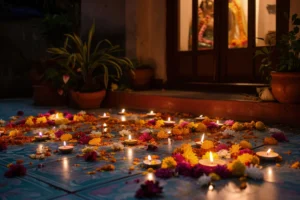
Lighting plays an important role in traditional prayer practices. A well-lit pooja room can create a warm and peaceful environment.
Natural sunlight is generally preferred where possible.
Traditional diyas may also be used during prayers according to one’s religious customs.
A clean and well-lit pooja room can create a more welcoming environment for meditation and prayer.
Also Read: Prana Mudra: Rejuvenate Your Life Force in the Easiest and Most Powerful Way
Colour is another important consideration in traditional Vastu Tips for Pooja Room.
Light and soothing shades are generally preferred for prayer spaces. Depending on the Vastu tradition being followed, colours such as white, cream, light yellow, pale orange, and other subtle tones may be considered suitable.
Very dark or excessively dramatic colours are often avoided because the objective is to create a calm and serene environment.
The final choice should also consider the natural lighting, size, ventilation, and overall interior design of the room.
A common mistake is using the prayer room to store miscellaneous household items.
Boxes, unused utensils, old newspapers, cleaning products, and unrelated belongings should not be stored in the pooja room.
Traditionally, a pooja room is intended to remain dedicated to prayer and spiritual activities.
Keep only items that are genuinely required for worship, such as:
Organising these items neatly can make the room more functional and peaceful.
Many homeowners worry after learning that their existing pooja room may not follow traditional Vastu recommendations. However, structural changes are not always practical.
The first step should be to assess the complete home rather than making random changes.
A traditional Vastu consultation may examine:
After understanding the complete layout, appropriate traditional remedies can be suggested.
This is one area where consulting an experienced best astrologer in Kolkata who also has knowledge of Vastu traditions may help you understand which remedies are relevant to your specific home.
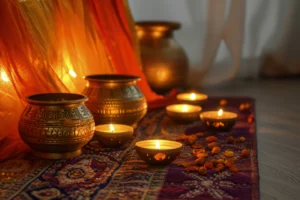
If relocating the pooja room is impossible, several traditional remedies may be considered.
Regular cleaning is one of the simplest remedies. Avoid dust accumulation, clutter, and damaged religious objects.
Where feasible, allow adequate daylight into the prayer space.
Consider light, peaceful shades for walls and furnishings.
Keep idols and religious objects arranged neatly with adequate space.
Broken or damaged idols and pictures should be handled respectfully according to one’s religious tradition rather than being kept indefinitely in the prayer area.
Avoid using the pooja room as a general-purpose storage room.
Regular prayers, meditation, chanting, or other spiritual practices according to one’s faith can make the space personally meaningful and peaceful.
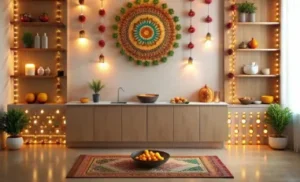
Modern apartments often do not provide a separate pooja room. In such situations, homeowners can create a dedicated prayer corner.
A small wall-mounted mandir or a neatly designed prayer cabinet can be used, provided it is placed in a clean and peaceful area.
The available floor plan should always be considered before deciding on a location.
A small home does not necessarily need a separate room for prayer.
A dedicated corner can be sufficient. The objective should be to create a space that feels peaceful, clean, and separate from everyday clutter.
A compact wooden mandir, wall-mounted unit, or dedicated shelf can work effectively in a smaller home.
The size of the prayer area is less important than its cleanliness, organisation, and suitability within the overall home layout.
According to traditional Vastu practices, homeowners may prefer to avoid the following:
These practices also help maintain the room as a dedicated and peaceful space.
General Vastu Tips for Pooja Room can provide useful guidelines, but every home has a different floor plan.
For example, a recommendation that works in an independent house may not be practical in an apartment. Similarly, changing one room’s position may not be possible without affecting other parts of the home.
A personalised consultation can consider the complete layout and suggest practical modifications rather than relying on one-size-fits-all remedies.
An experienced best astrologer in Kolkata can also provide guidance based on the individual’s requirements and, where appropriate, combine traditional Vastu considerations with astrological analysis.
Vastu Shastra and astrology are distinct traditional systems, although practitioners sometimes use them together.
Vastu primarily focuses on the arrangement and orientation of physical spaces, while astrology traditionally studies planetary positions and their relationship with an individual’s life.
Some practitioners believe that considering both can provide a more personalised approach to spiritual and environmental practices.
However, Vastu and astrology should not replace practical considerations such as safety, ventilation, accessibility, structural integrity, or professional architectural advice.
Apart from structural Vastu considerations, simple daily habits can make the prayer space more peaceful.
Start with cleanliness:
Keep the altar and surrounding area clean.
Use fresh flowers when appropriate:
Remove wilted flowers regularly.
Light a diya safely:
Follow your family’s traditional practice while observing fire safety.
Spend a few quiet minutes in prayer:
A calm environment can help create a consistent spiritual routine.
Keep religious materials organised:
Store books and worship accessories properly.
Avoid unnecessary distractions:
Keeping phones, unrelated electronics, and clutter away from the prayer area can make it easier to concentrate.
Traditionally, the north-east direction is considered highly favourable for a pooja room. East and north may also be considered depending on the home’s layout.
In many situations, traditional remedies and changes to placement, cleanliness, lighting, colours, and arrangement can be considered without major reconstruction. The appropriate approach depends on the individual floor plan.
Yes. In apartments and smaller homes, a dedicated prayer corner or compact mandir can be created within the living area. Ideally, it should be clean, organised, and visually separated from general household activities.
No. A separate room is not always practical or necessary. A dedicated and respectfully maintained prayer space can also be created in a suitable part of the home.
Do not make structural changes without first examining the entire floor plan. Traditional Vastu consultation can help identify practical remedies appropriate to the home’s specific configuration.
The pooja room represents faith, devotion, peace, and spiritual practice for many Indian families. Traditional Vastu Shastra provides several guidelines regarding its direction, placement, cleanliness, colours, lighting, and organisation.
The most important Vastu Tips for Pooja Room include choosing a suitable location, preferably the north-east where practical, keeping the space clean and uncluttered, arranging idols respectfully, ensuring adequate light and ventilation, and avoiding the use of the prayer area as general storage.
If your existing pooja room does not follow traditional Vastu recommendations, there is no need to make hasty structural changes. A detailed assessment of the entire home can help identify practical options.
For individuals seeking personalised guidance on astrology and traditional Vastu principles, consulting an experienced best astrologer in Kolkata can help provide a more customised perspective based on the home’s layout and the individual’s requirements.