Posted Date: 24 Sep, 2026
Can a simple hand gesture create a more peaceful meditation experience? Prayer Mudra may help you cultivate mindful attention, calm breathing, and inner balance. Moreover, combining this traditional gesture with chanting can create a meaningful spiritual routine. However, its benefits should be understood as supportive wellness practices rather than medical treatment for stress, anxiety, or other health conditions learn from Best Astrologer in Kolkata.
Mudra and Chanting combine intentional hand positioning with focused sound or repetition during spiritual and meditative practices. Prayer Mudra, commonly performed with palms together, may encourage concentration and mindful awareness. When paired with steady breathing or chanting, it can create a structured meditation routine. Beginners can practice gently and consistently while respecting their individual spiritual beliefs and comfort.
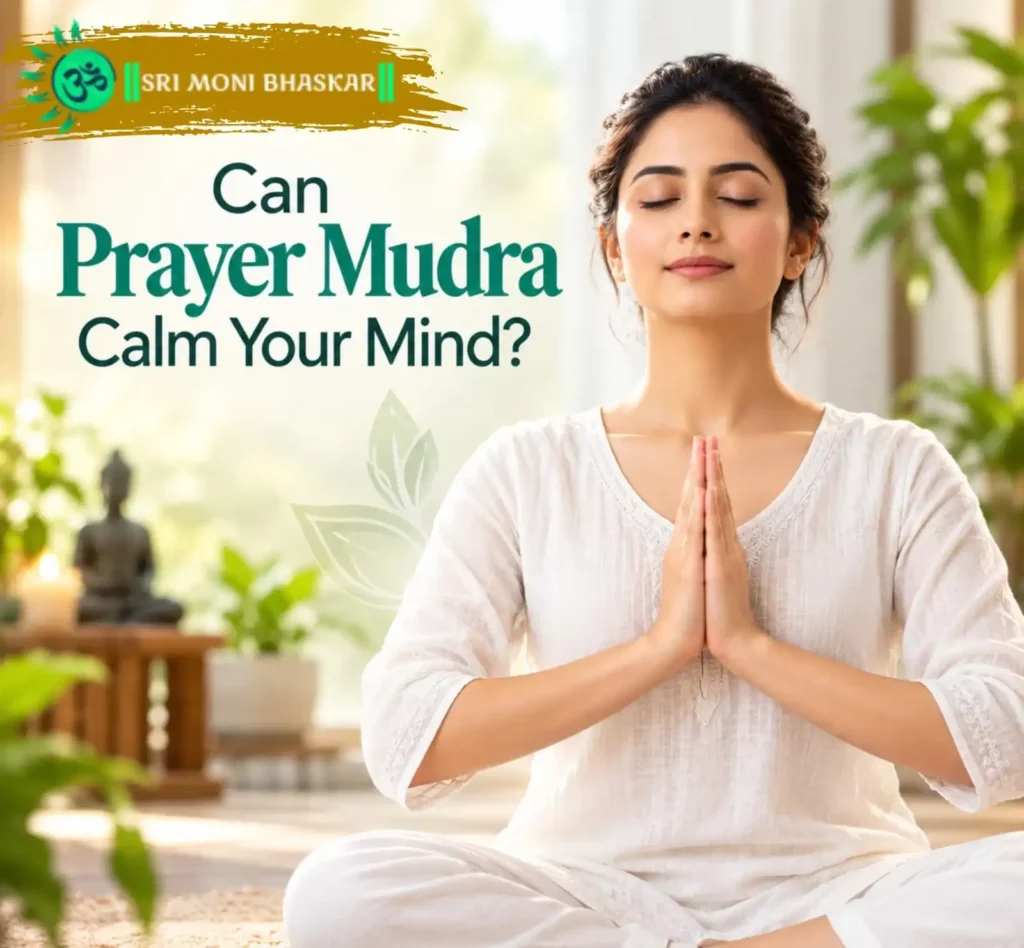
Prayer Mudra, commonly known as Anjali Mudra, involves bringing the palms together in front of the chest. It is traditionally associated with respect, gratitude, balance, and mindful awareness.
The gesture can be incorporated into:
Rather than viewing the gesture as a guaranteed treatment for a particular condition, practitioners can consider it a traditional tool for creating a focused and reflective state.
How to practice Prayer Mudra for beginners is straightforward and requires no special equipment.
Beginners can start with 3–5 minutes and gradually increase the duration according to comfort. The emphasis should be on relaxed breathing, mindful attention, and consistency rather than maintaining the gesture for a specific amount of time.
Can a simple hand gesture create a more peaceful meditation experience? Prayer Mudra may help you cultivate mindful attention, calm breathing, and inner balance. Moreover, combining this traditional gesture with chanting can create a meaningful spiritual routine. However, its benefits should be understood as supportive wellness practices rather than medical treatment for stress, anxiety, or other health conditions.
Prayer Mudra, in particular, can encourage concentration and reflective practice. Furthermore, beginners can combine comfortable breathing, gentle chanting, and mindful attention. With consistent practice, this simple routine may become a powerful part of a balanced meditation experience.
Prayer Mudra, commonly known as Anjali Mudra, involves bringing the palms together in front of the chest. Traditionally, this gesture represents respect, gratitude, unity, and mindful awareness. It can be incorporated into: Yoga practice Meditation Prayer Mantra repetition Breath awareness Spiritual reflection Mindfulness routines Furthermore, its simplicity makes it accessible to people who are new to meditation. Rather than focusing on perfect positioning, practitioners can prioritize comfort, relaxed breathing, and attentive awareness.
Can Prayer Mudra reduce stress and anxiety? It may support a calming routine when combined with meditation, slow breathing, or mindfulness. However, Prayer Mudra should not be presented as a standalone treatment for an anxiety disorder or other mental-health condition. A peaceful practice can include: Sitting comfortably. Relaxing the shoulders. Bringing the palms together. Breathing slowly and naturally. Focusing attention on the breath. Adding a gentle chant or mantra. Remaining still for a few moments afterward. Consequently, the overall meditation routine—not simply the hand position—may contribute to a person’s sense of relaxation and focus.
Prayer Mudra may support relaxation when practiced as part of meditation, controlled breathing, or mindfulness. The hand gesture itself should not be considered a proven standalone treatment for anxiety disorders.
A calming routine may involve:
If stress or anxiety is persistent or significantly affects daily life, professional mental-health support may be appropriate.
Potential benefits are primarily associated with the meditative and mindful practice surrounding the gesture, rather than the hand position being a medical treatment.
Prayer Mudra gives practitioners a physical point of focus, which may make it easier to settle into meditation.
Using the same gesture during meditation can create a consistent beginning or ending to a practice.
The traditional symbolism of joined palms can encourage gratitude, respect, and inward reflection.
Prayer Mudra can be combined with slow, comfortable breathing to create a structured mindfulness session.
Mudra and Chanting can be practiced together to help establish a focused spiritual or meditative environment.
Mudras and chanting are traditionally used together in several yoga and spiritual practices. Prayer Mudra provides a physical gesture, while chanting gives the mind a repeated sound or phrase to focus on.
A simple routine could include:
Prayer Mudra → slow breathing → gentle chanting → silent meditation → relaxation
The chosen chant should be comfortable and meaningful to the practitioner. There is no need to force the voice, breathing pattern, or posture. Check our Youtube for learn more click: https://www.youtube.com/@DreamDestiny
| Practice | Potential purpose |
| Prayer Mudra | Focus and mindful awareness |
| Slow breathing | Relaxation and breath awareness |
| Chanting | Concentration and repetitive focus |
| Meditation | Self-observation and mental stillness |
| Consistent practice | Establishing a mindful routine |
| Gratitude reflection | Encouraging positive reflection |
These are traditional or potential wellness benefits, not guarantees of medical outcomes.
Prayer Mudra can be incorporated into different parts of a daily routine.
Morning: Start your day with a brief meditation.
Before yoga: Use it to settle your attention before practice.
During meditation: Maintain the gesture while focusing on your breath.
During chanting: Combine the mudra with a comfortable mantra or prayer.
Evening: Use it during quiet reflection before bedtime.
Comfort and awareness are more important than creating tension in the hands or body.
A beginner-friendly meditation sequence can take only a few minutes:
Those seeking personalized guidance can book yoga consultation for meditation practice to understand how meditation, breathing, mudras, and chanting may be incorporated into an individual routine.
Meditation practices generally become easier to maintain when they fit naturally into a person’s daily schedule. Instead of beginning with a lengthy session, beginners can establish a short, manageable routine and gradually develop greater familiarity. Visit our map click: https://www.google.com/maps/place/Sri+Moni+Bhaskar+(+Dream+Destiny+)/@22.5166245,88.2937834,13z/data=!4m7!3m6!1s0xa994e21f83d7037:0xcfb8305964875375!8m2!3d22.5166245!4d88.3658812!15sChBzcmkgbW9uaSBiaGFza2FyWhIiEHNyaSBtb25pIGJoYXNrYXKSAQphc3Ryb2xvZ2Vy4AEA!16s%2Fg%2F11xgfhdvsk
For example:
| Week | Suggested practice |
| Week 1 | 3–5 minutes daily |
| Week 2 | 5–7 minutes daily |
| Week 3 | 7–10 minutes daily |
| Week 4 | 10 minutes or according to comfort |
This schedule is only a practical example, not a medical or therapeutic prescription.
Prayer Mudra offers a simple way to introduce mindful awareness into yoga, meditation, prayer, and chanting. Beginners can practice it comfortably for a few minutes while focusing on natural breathing and concentration. Mudra and Chanting may complement a reflective routine, although the gesture should not be treated as a medical cure. Consistent, comfortable practice can help create a meaningful meditation habit.
What is Prayer Mudra?
Prayer Mudra, commonly called Anjali Mudra, is a traditional hand gesture in which the palms are brought together, usually near the chest. It is often used during yoga, meditation, prayer, and mindful practices.
How to practice Prayer Mudra for beginners?
Sit comfortably, keep your spine naturally upright, bring your palms together near the chest, relax your shoulders, and breathe naturally. Beginners can hold the gesture for a few minutes during meditation.
Can Prayer Mudra reduce stress and anxiety?
Prayer Mudra may contribute to a relaxing meditation routine when combined with breathing and mindful attention. However, it should not be considered a standalone treatment for anxiety or other mental-health conditions.
Can I combine Prayer Mudra with chanting?
Yes. Mudra and Chanting can be practiced together as part of a traditional meditation or spiritual routine. Practitioners can use a comfortable chant while maintaining relaxed breathing and posture.
How long should I practice Prayer Mudra?
Beginners can start with around 3–5 minutes and gradually increase the duration according to comfort. Consistency and relaxed attention are more important than maintaining the gesture for a fixed long period.
Is Prayer Mudra suitable for beginners?
Yes. Prayer Mudra is relatively simple and does not require specialised equipment. Beginners should focus on comfortable positioning, natural breathing, and mindful attention rather than forcing the hands or posture.
Can Prayer Mudra be practiced during yoga?
Yes. It can be incorporated before, during, or after a yoga session, depending on the practitioner’s tradition and purpose. It may also be used during meditation or relaxation at the end of practice.
Prayer Mudra comes from established traditions of yoga, meditation, and spiritual practice. Its symbolic and contemplative uses should be distinguished from medical claims. For wellness content, it is important to avoid presenting a mudra as a guaranteed cure for stress, anxiety, or disease.
Under the guidance of Astrologer Sri Moni Bhaskar, individuals interested in integrating spiritual practices with meditation can explore a routine that respects their personal beliefs, comfort, and existing practices. Where a health concern is involved, qualified healthcare professionals should remain the appropriate source for diagnosis and treatment.